Visit from the Head of the Greenland Representation
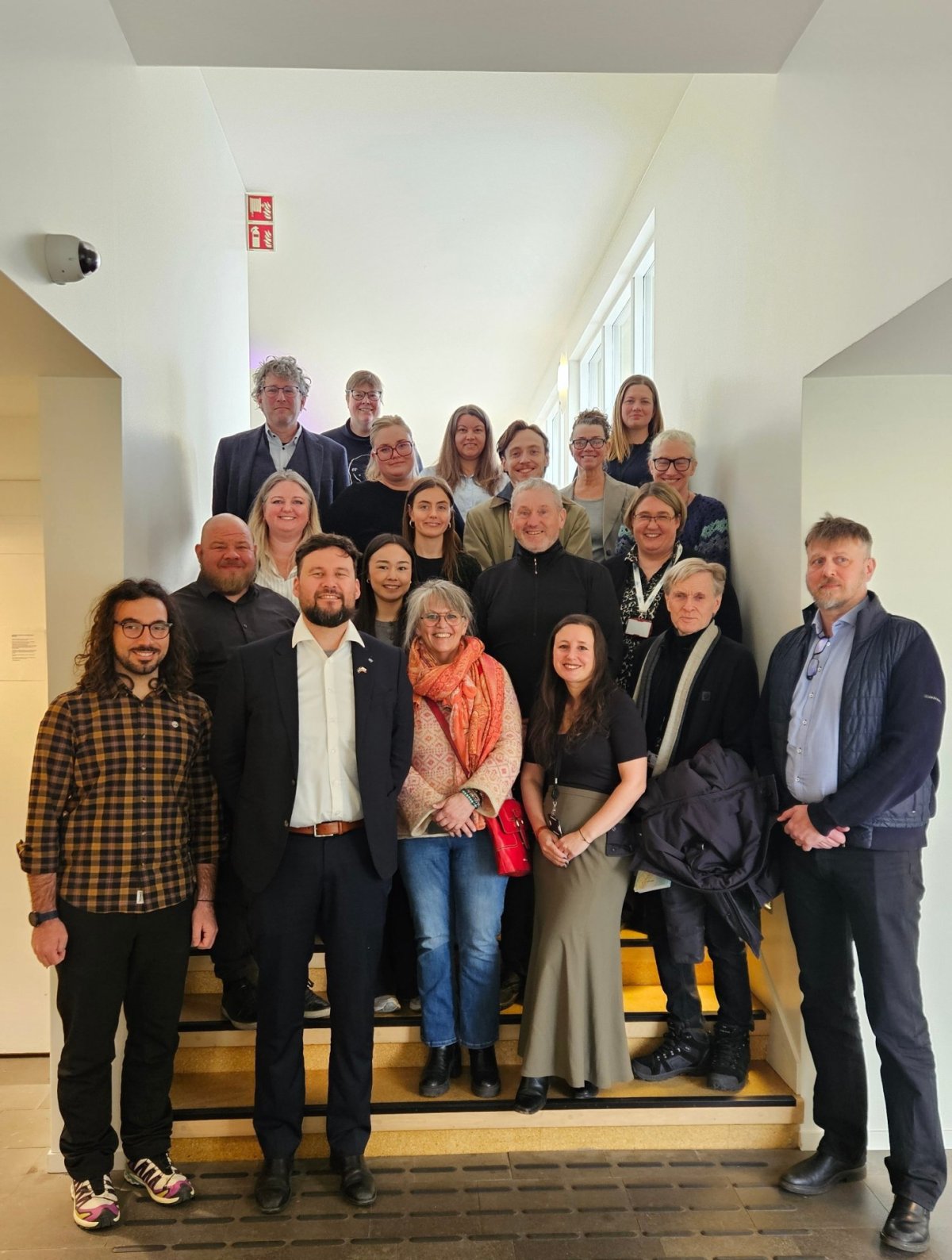
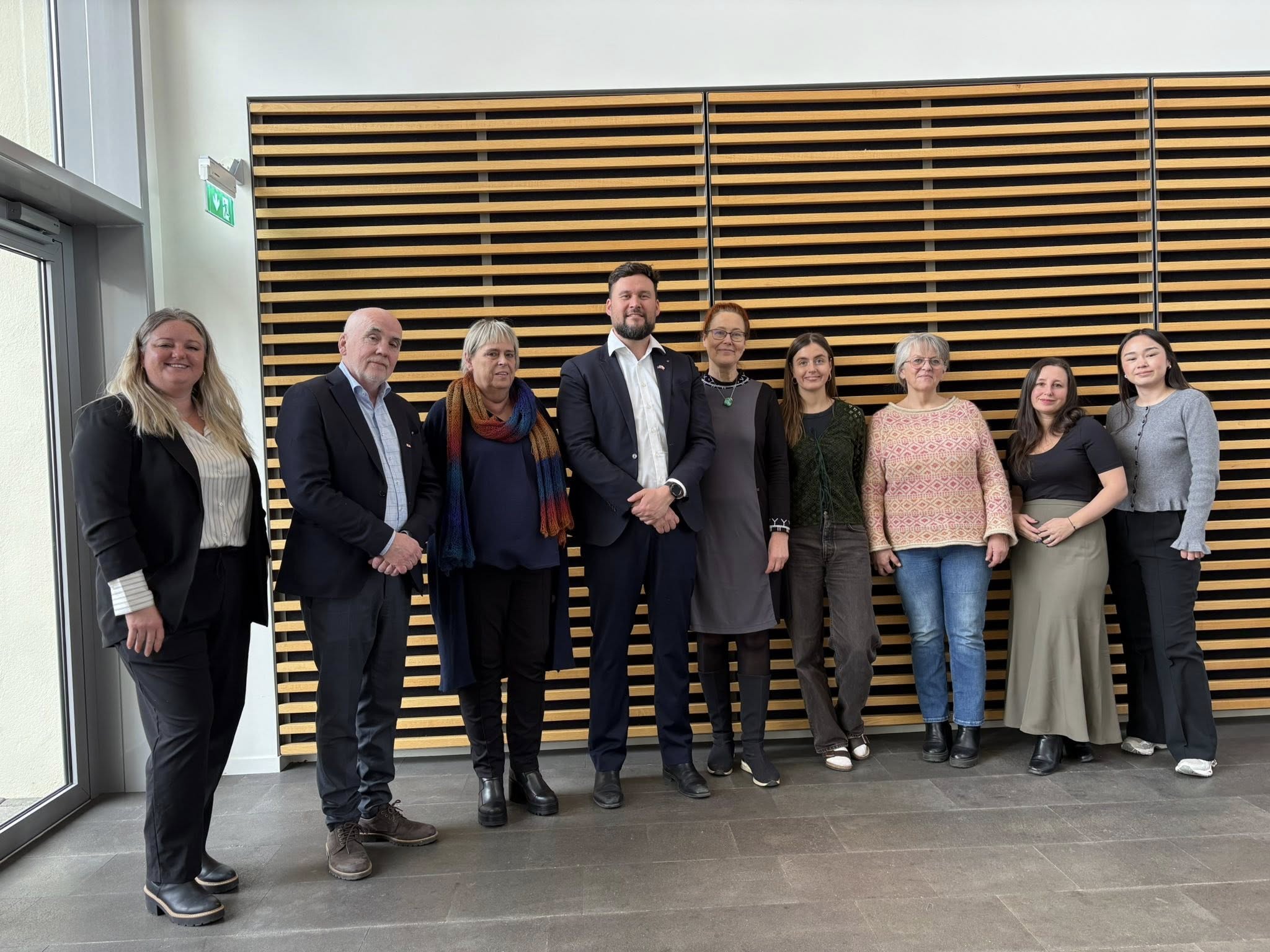
On May 7, the University of Akureyri and the Arctic institutions on campus received a visit from the Head of the Greenland Representative in Reykjavík, Karsten Peter Jensen. Accompanying him were Birta Jóhannesdóttir, secretary at the representation office, and intern Malu Hendriksen.
Introduction to the Arctic Knowledge Centre on Campus
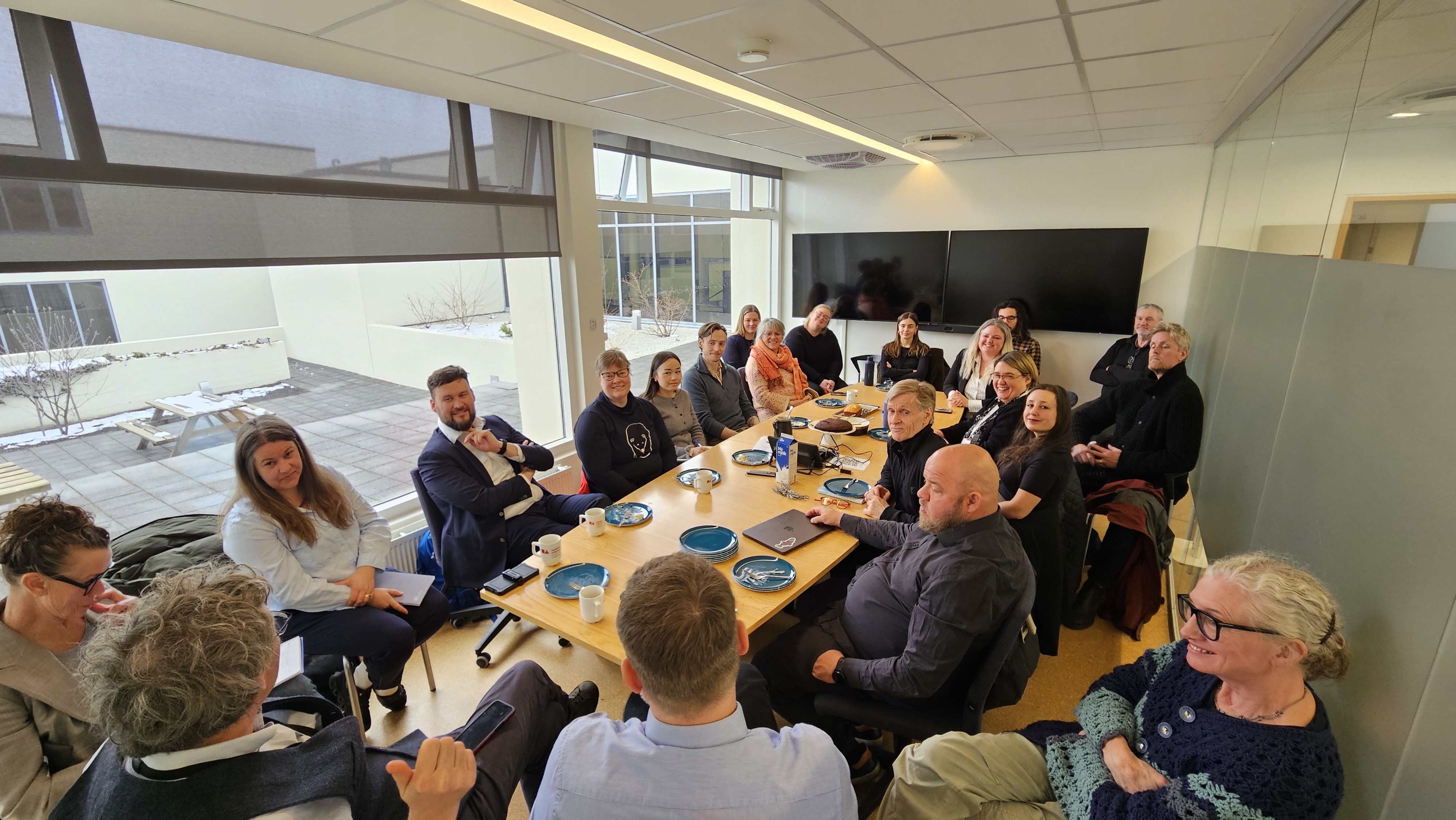
The delegation’s first stop was Borgir research and innovation centre located on the University of Akureyri campus. While at Borgir, the delegation visited the offices of Arctic Council Working Groups CAFF (Conservation of Arctic Flora and Fauna) and PAME (Protection of the Arctic Marine Environment), the International Arctic Science Committee (IASC), the Icelandic Arctic Cooperation Network (IACN), and the Stefansson Arctic Institute.
The delegation then joined the final Arctic Coordination meeting of the semester, held at the university. The Arctic Coordination meetings are held by the Arctic Centre at UNAK every other week to create an open platform for dialogue and collaboration among those working on Arctic issues on campus, where a well-established hub of Arctic experts and organisations has developed over many years. The meeting provided a platform for fruitful discussions about connections to Greenland and the important role of Akureyri as a centre for expertise in Arctic affairs in Iceland.
Open Seminar on Greenland’s Political History and Its Place in Global Affairs
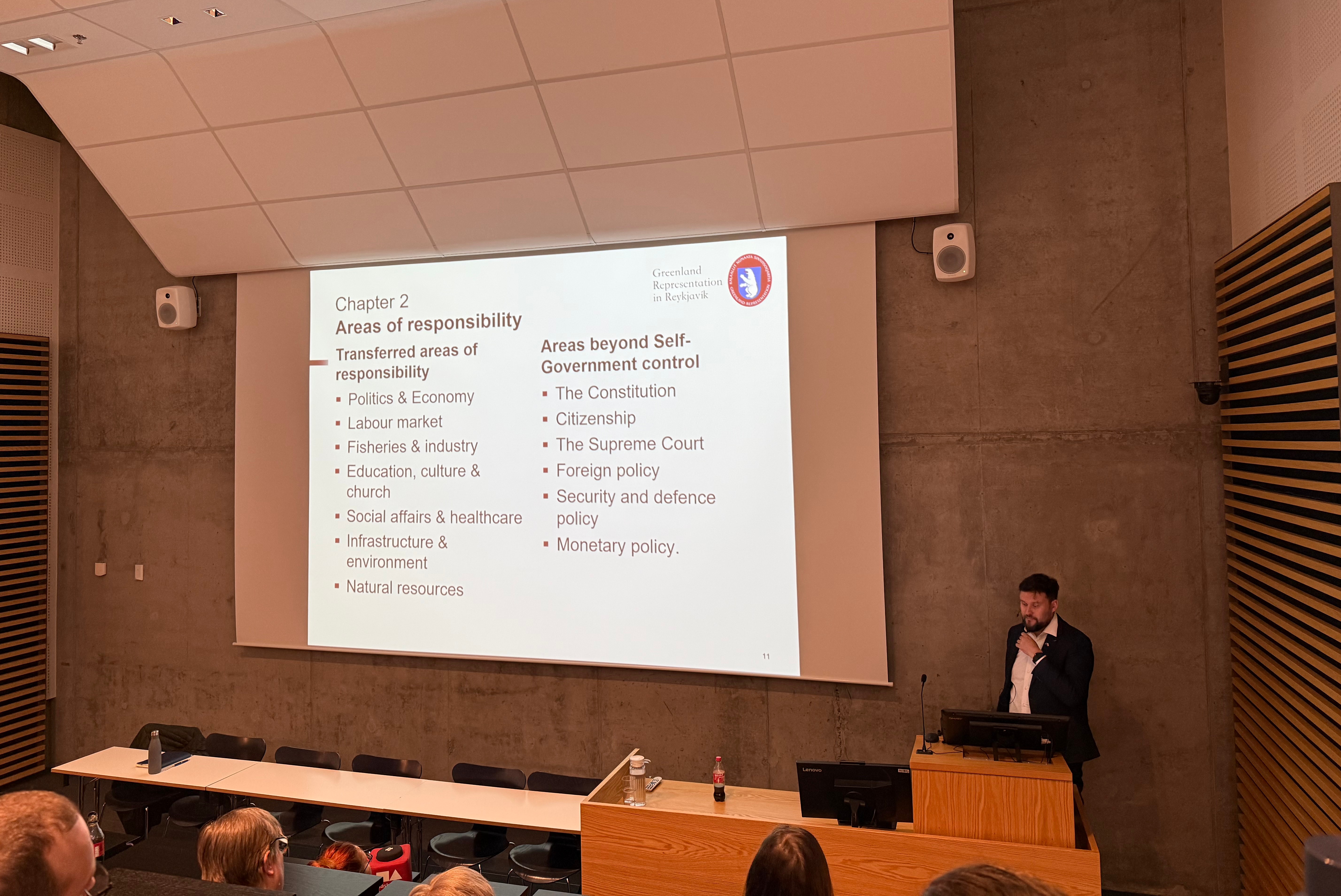
After lunch, Karsten Peter Jensen delivered an open lecture titled Kalaallit Nunaat / Greenland: Political History to Present-Day.
In his lecture, he addressed Greenland’s current position on the international stage, including in the context of external pressure arising from threats by the U.S. President earlier this year to take control of the island. Karsten also reviewed Greenland’s political history, noting, among other things, its entry into the European Economic Community (now the European Union) with Denmark in 1973 despite majority opposition in Greenland, and its subsequent withdrawal in 1985 following the introduction of home rule in 1979, making it the first country to exit the Community. Karsten also discussed the framework of the Self-Government Act of 2009, economic issues, opportunities in tourism and mining, and Greenland’s foreign service.
In the context of foreign affairs, he highlighted an important moment last year, when the Kingdom of Denmark assumed the chairmanship of the Arctic Council, appointing the first Arctic Ambassador and the Chair of the Senior Arctic Officials from Greenland. Karsten concluded by describing some of the daily tasks carried out by the Greenland Representation in Reykjavík. Following the seminar, Karsten spent time with students in Polar Law before attending a meeting with the mayor of Akureyri, Ásthildur Sturludóttir.
A nice connection at the Stefansson Arctic Institute is that Maria Ackrén, our new director, was Karsten’s teacher at Ilisimatusarfik (the University of Greenland) and his supervisor for his master's thesis. The visit therefore provided a welcome opportunity for reunion along with fruitful discussions and we look forward to further strengthening the close ties between Greenland and Akureyri.