
Dr. Romain Chuffart Joins Stefansson Arctic Institute with Two New Research Projects
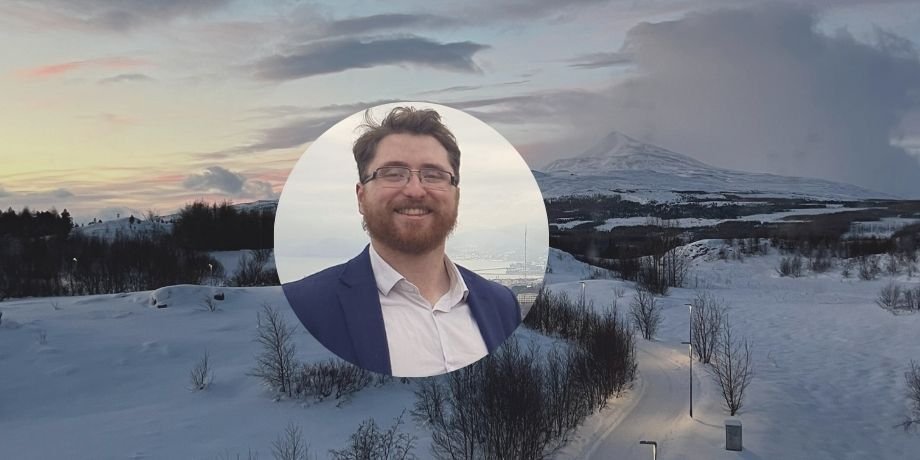
The Stefansson Arctic Institute is pleased to announce that, as of January 1, 2026, Dr. Romain Chuffart, Nansen Professor in Arctic Studies at the University of Akureyri and President and Managing Director of The Arctic Institute – Center for Circumpolar Security Studies, has joined the Institute. Having recently secured funding for two international research projects, Dr. Chuffart will coordinate both research consortia from the Stefansson Arctic Institute.
Romain is a graduate of the Polar Law master’s programme of the University of Akureyri and holds a PhD from Durham Law School (United Kingdom). Since 2024, he has been an active contributor to Arctic research at the University of Akureyri as Nansen Professor in Arctic Studies. The Nansen Professorship is a guest professorship established under a 2011 MoU between Iceland and Norway to enhance Arctic scientific cooperation. It is awarded to an outstanding scientist working on issues that bear on legal, economic, social, and natural circumstances in the Arctic.
Autonomous Technologies for Ocean Governance: Maritime Autonomy, Responsibility, and Environment (AUTO-MARE)
The first project, Autonomous Technologies for Ocean Governance: Maritime Autonomy, Responsibility, and Environment (AUTO-MARE), led by Romain (Principal Investigator) and funded by NordForsk’s Nordic–Baltic initiative, will run from 1 January 2026 to 31 December 2028. The project will examine how AI-enabled and autonomous maritime systems are changing ocean governance, with a focus on responsibility, safety, liability, and environmental protection. The research will evaluate how Nordic–Baltic governance approaches can respond to these technological changes while promoting transparency, accountability, and environmental justice. The AUTO-MARE project brings together a network of leading institutions: Kaunas University of Technology (Lithuania), the Arctic Centre at the University of Lapland (Finland), Nord University (Norway), the University of Stavanger (Norway), the University of Gothenburg (Sweden), and CLIMA – Centre for Climate Change Law and Governance at the University of Copenhagen (Denmark).
ICE BRIDGE: Bridging Ice Climate Technologies and Governance for Biodiversity in the Arctic
Romain also serves as principal investigator for the second project, ICE BRIDGE: Bridging Ice Climate Technologies and Governance for Biodiversity in the Arctic, which is funded under the Biodiversity and Transformative Change call of the European Biodiversity Partnership Biodiversa+. ICE BRIDGE will run from January 1, 2026, to December 31, 2028. Focusing on the rapidly changing Arctic environment, the project investigates how emerging climate intervention technologies and their associated infrastructures may affect Arctic biodiversity, and how governance systems can proactively manage these risks. The research will examine the intersections between climate technologies (particularly solar radiation management), ecological vulnerability, and legal responsibility, and identify the regulatory and institutional designs required to protect biodiversity and promote climate and environmental justice. The project is carried out in collaboration with leading researchers at partner institutions at the Arctic Centre, University of Lapland (Finland); Nord University (Norway); Universitat Autònoma de Barcelona (Spain); Húsavík Research Center at the University of Iceland (Iceland); and the Alfred Wegener Institute, Helmholtz Centre for Polar and Marine Research (Germany).
Looking forward to the times ahead
Looking ahead, Romain is excited to join the Stefansson Arctic Institute and lead these two projects. “The Stefansson Arctic Institute is one of the most influential research organizations in the Arctic world and I hope I can contribute to its outstanding legacy of interdisciplinary scholarship. By integrating these new international projects into the Institute’s work, I look forward to fostering deep collaboration that bridges the gap between law, technology, and the social sciences to address the complex challenges facing the Arctic today”, says Romain.
We extend our congratulations to Romain on the launch of these exciting new projects and warmly welcome him to the Stefansson Arctic Institute.